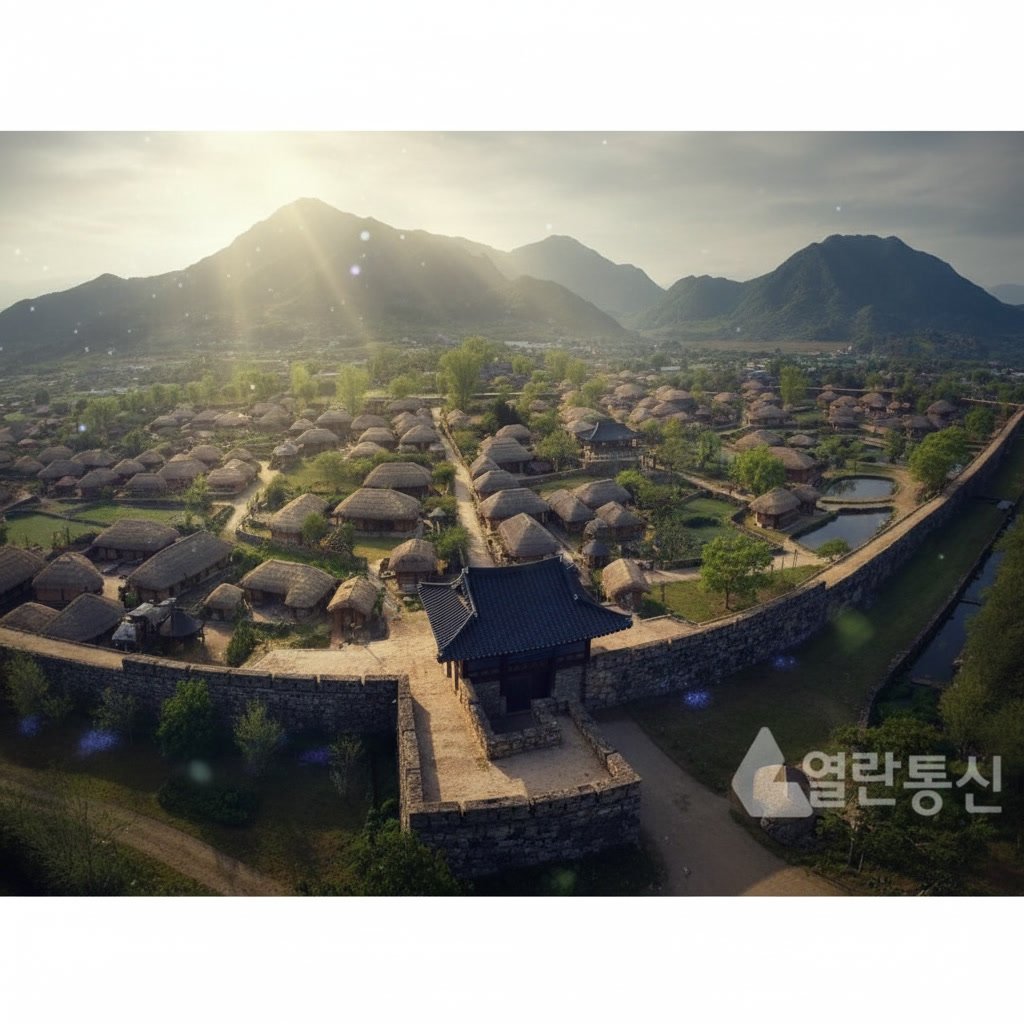
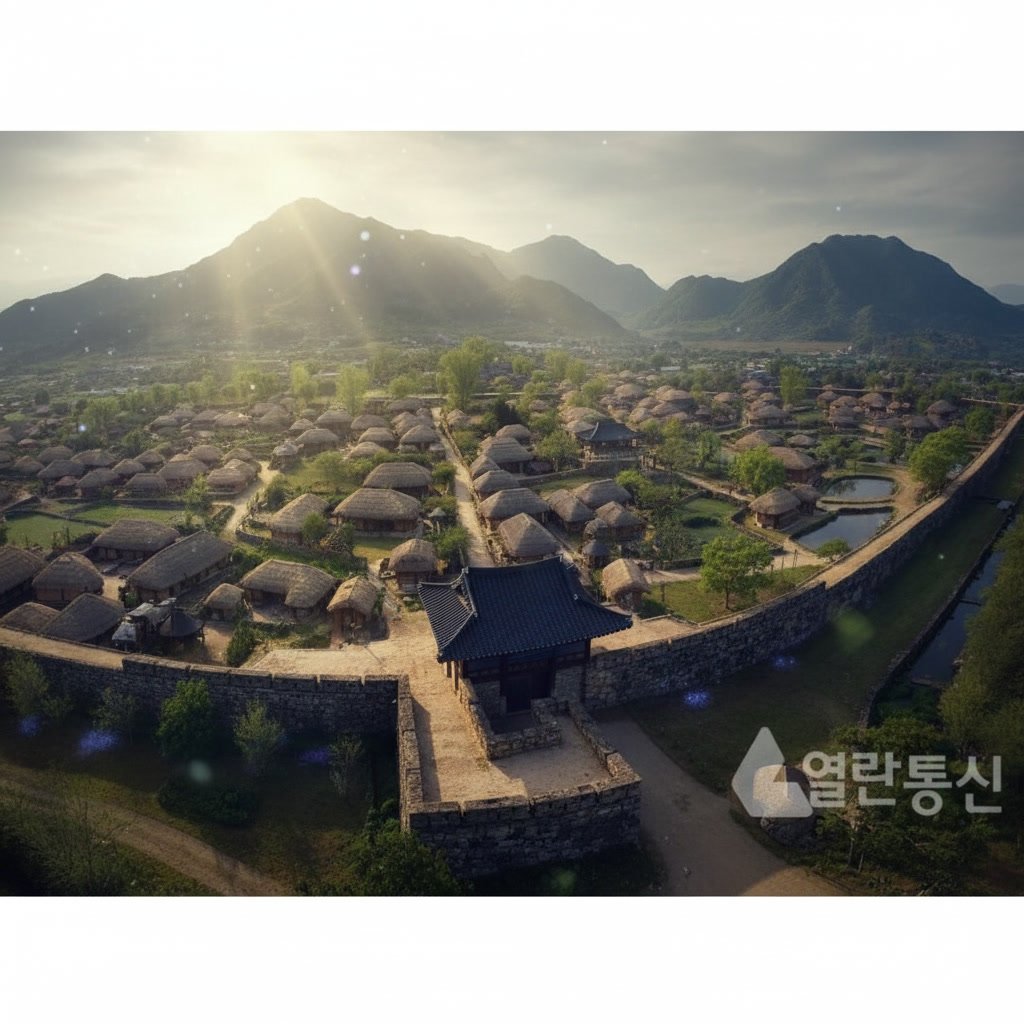
With over 70% of its territory covered by mountains, the Korean Peninsula developed a unique fortification culture tailored to its terrain. Unlike Western castles, which primarily served as aristocratic residences, Korean fortresses were designed for the survival of the entire community. This post dives deep into the dual defense strategy involving Eupseong (Town Fortresses) and Sanseong (Mountain Fortresses).
- Eupseong: The Cradle of Daily Life Eupseong were built on flat or gently sloping land to protect administrative centers and residential areas. During times of peace, these walls provided security for markets and farming communities. While not as imposing as mountain forts, they featured sophisticated defensive structures like ‘Ongseong’ (semi-circular gate shields) and moats to deter sudden raids.
- Sanseong: The Impregnable Natural Fortress When a full-scale invasion occurred, the strategy shifted. Following the ‘Ippo Strategy,’ the entire population would evacuate to a nearby Sanseong. These were built atop rugged mountain ridges, utilizing steep cliffs as natural walls. This made them nearly impossible for enemy forces to seize, even with superior numbers.
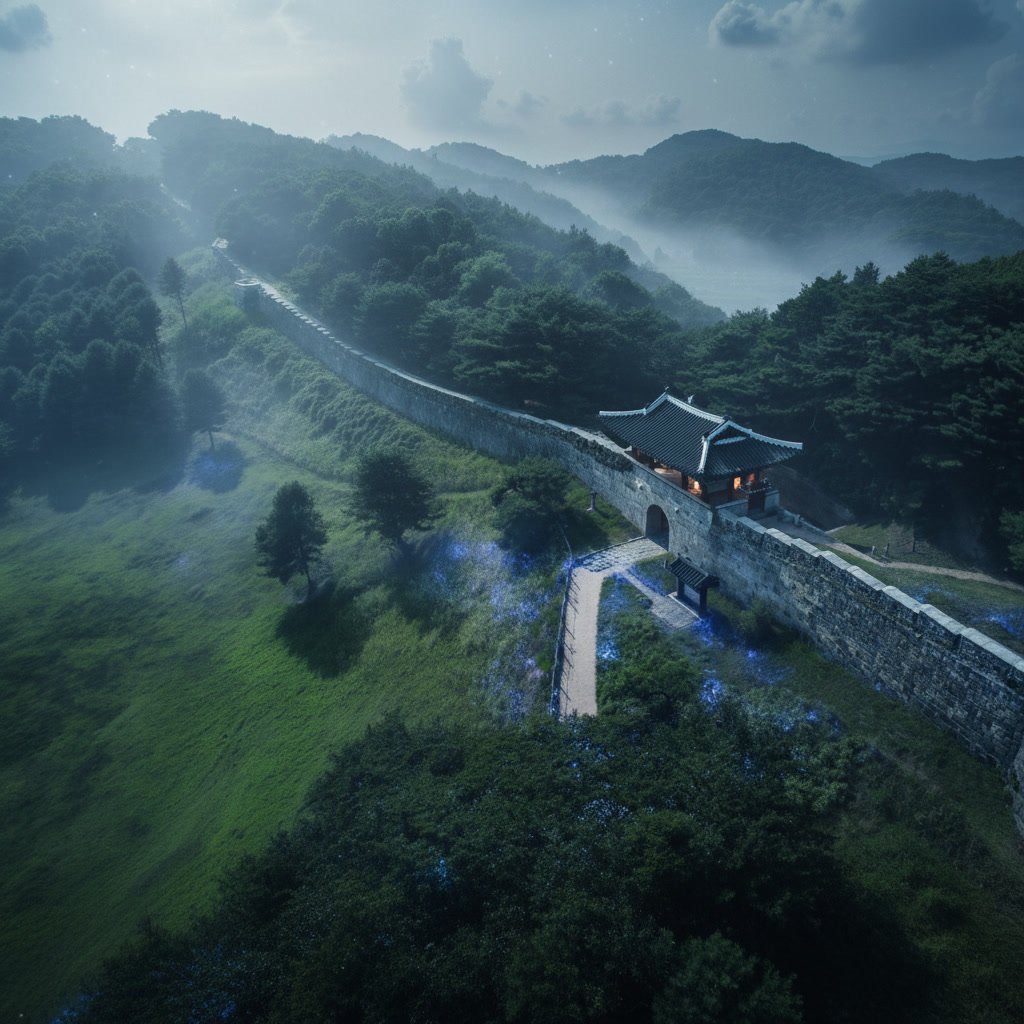
- The Scorched Earth Synergy As people moved to the mountain forts, they practiced the ‘Scorched Earth Policy’—carrying away or burning all food supplies in the town. This left invading forces with no local resources. By holding out in the mountains and harassing enemy supply lines, Korean defenders turned the tide of numerous historical wars.
Eupseong and Sanseong were not isolated structures but a unified grid designed for total defense. They represent a legacy of resilience, showcasing how ancestral wisdom transformed natural landscapes into a shield for the nation.
Copyright ⓒ 2026 baguniinfo.com. All rights reserved.
No part of this post (text & images) may be reproduced or reused in any form without permission. Unauthorized redistribution is strictly prohibited.